
| In Search of the Miraculous |
In Search of the Miraculous
Fragments of an Unknown Teaching
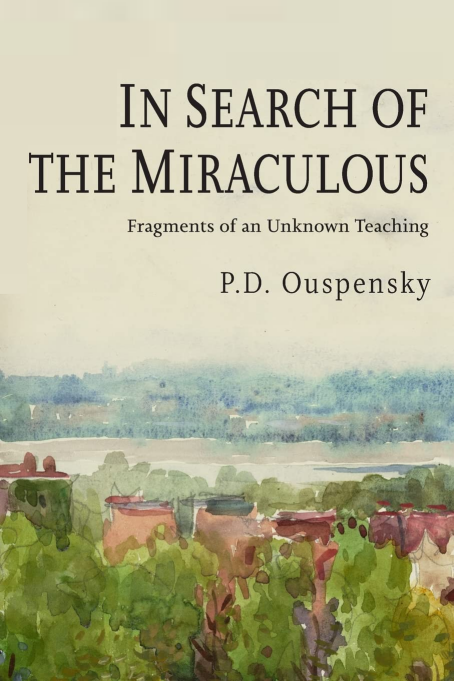 |
This book is P.D. Ouspensky's account of his work with the spiritual teacher G.I. Gurdjieff between 1915 and 1918 in Russia and Constantinople. It stands as one of the most comprehensive records of Gurdjieff's teaching, presenting a complete outline of his "system" – a practical method for inner development and self-transformation.
Ouspensky, already an established writer and philosopher when he met Gurdjieff, brought his keen analytical mind and gift for clear exposition to the task of recording these teachings. The result is a remarkably lucid presentation of ideas that are at once ancient and revolutionary, practical and metaphysical.
Within these pages, readers will encounter:
- The Ray of Creation and humanity's place in the cosmic order
- The Law of Three and the Law of Seven (octaves)
- The doctrine of many "I"s and the illusion of permanent self
- The concept of self-remembering and conscious work
- The enneagram as a universal symbol of transformation
- The idea of the "food factory" – the human body as a transformer of energies
- The distinction between essence and personality
- Methods for escaping mechanical existence
First published in 1949 (shortly after Ouspensky's death), this work has influenced generations of seekers, philosophers, and psychologists. It remains essential reading for anyone interested in the Fourth Way, spiritual psychology, or the practical science of consciousness.
This digital edition has been carefully prepared to preserve the integrity of the original text while enhancing readability and navigation for modern readers.
Return from India, 3
The war and the “search for the miraculous”, 3
Old thoughts, 3
The question of schools, 4
The East and Europe, 5
Plans for further travels, 5
A notice in a Moscow newspaper, 6
Lectures on India, 6
The meeting with G, 7
A “disguised man”, 7
The first talk, 7
G.’s opinion on schools, 9
G.’s group, 9
“Glimpses of Truth”, 10
Further meetings and talks, 12
The organization of G.’s Moscow group, 12
The question of payment and of means for the work, 12
The question of secrecy and of the obligations accepted by the pupils, 14
A talk about the East, 15
“Philosophy,” “theory,” and “practice”, 15
How was the system found?, 15
G.’s ideas, 16
Is psychology necessary for the study of machines?, 19
A man is responsible for his actions, a machine is not responsible, 19
Nobody “does” anything, 21
Everything “happens”, 21
“Man is a machine” governed by external influences, 21
In order “to do” it is necessary “to be”, 22
The promise of “facts”, 23
Can wars be stopped?, 23
A talk about the planets and the moon as living beings, 24
The “intelligence” of the sun and the earth, 25
“Subjective” and “objective” art, 27
Petersburg in 1915, 29
G.in Petersburg, 29
A talk about groups, 29
Reference to “esoteric” work, 30
“Prison” and “Escape from prison”, 30
What is necessary for this escape?, 30
Who can help and how?, 30
Struggle between “yes” and “no”, 32
Crystallization on a right, and on a wrong, foundation, 31
Talks with G. and observations, 33
Necessity of sacrifice, 33
Beginning of meetings in Petersburg, 33
A sale of carpets and talks about carpets, 34
What G. said about himself, 35
Question about ancient knowledge and why it is hidden, 36
G.’s reply, 37
Knowledge is not hidden, 37
The materiality of knowledge and man’s refusal of the knowledge given to him, 37
A question on reincarnation and future life, 40
A question on immortality, 40
The “four bodies of man”, 40
Example of the retort filled with metallic powders, 43
How can immortality be attained?, 44
The way of the fakir, the way of the monk, and the way of the yogi, 44
The “fourth way”, 48
Do civilization and culture exist?, 51
G.’s fundamental ideas concerning man, 53
Absence of unity, 53
Multiplicity of I’s, 53
Psychic centers, 54
G.’s method of exposition of the ideas of the system, 55
Repetition unavoidable, 56
What the evolution of man means, 56
Mechanical progress impossible, 56
European idea of man’s evolution, 57
Connectedness of everything in nature, 57
Humanity's evolution is fatal for the moon, 57
Advantage of individual man over the masses, 58
Nature does not want evolution, 58
Consciousness cannot evolve unconsciously, 58
Construction of the human machine, 58
Necessity of knowing the human machine, 59
Absence of a permanent I in man, 59
Role of small I’s, 60
Absence of individuality and will in man, 60
Eastern allegory of the house and its servants, 60
The “deputy steward”, 60
Talks about a fakir on nails and Buddhist magic, 61
General impressions of G.’s system, 64
Looking backwards, 64
One of the fundamental propositions, 64
The line of knowledge and the line of being, 64
Being on different levels, 65
Divergence of the line of knowledge from the line of being, 65
What a development of knowledge gives without a corresponding change of being—and a change of being without an increase in knowledge, 67
What “understanding” means, 67
Understanding as the resultant of knowledge and being, 67
The difference between understanding and knowledge, 67
Understanding as a function of three centers, 68
Why people try to find names for things they do not understand, 68
Our language, 68
Why people do not understand one another, 68
The word “man” and its different meanings, 69
The language accepted in the system, 70
The principle of relativity in the system, 70
Seven gradations of the concept “man”, 71
Gradations parallel to the gradations of man, 72
The word “world”, 74
Variety of its meanings, 75
Examination of the word “world” from the point of view of the principle of relativity, 76
The fundamental law of the universe, 77
The law of three principles or three forces, 77
Necessity of three forces for the appearance of a phenomenon, 77
The third force, 78
Why we do not see the third force, 78
Three forces in ancient teachings, 79
The creation of worlds by the will of the Absolute, 79
A chain of worlds or the “ray of creation”, 80
The number of laws in each world, 81
A lecture on the “mechanics of the universe”, 82
The ray of creation and its growth from the Absolute, 82
A contradiction of scientific views, 83
The moon as the end of the ray of creation, 83
The will of the Absolute, 83
The idea of miracle, 84
Our place in the world, 84
The moon feeds on organic life, 85
The influence of the moon and liberation from the moon, 85
Different “materiality” of different worlds, 86
The world as a world of “vibrations”, 87
Vibrations slow down proportionately to the distance from the Absolute, 87
Seven kinds of matter, 87
The four bodies of man and their relation to different worlds, 87
Where the earth is, 88
The three forces and the cosmic properties of matter, 89
Atoms of complex substances, 89
Definition of matter according to the forces manifested through it, 89
“Carbon,” “oxygen,” “nitrogen,” and “hydrogen”, 90
The three forces and the four matters, 90
Is man immortal or not?, 91
What does immortality mean?, 91
A man having the fourth body, 92
The story of the seminarist and the omnipotence of God, 95
Talks about the moon, 95
The moon as the weight of a clock, 95
Talk about a universal language, 95
Explanation of the Last Supper, 97
Talk about aims, 99
Can the teaching pursue a definite aim?, 99
The aim of existence, 99
Personal aims, 99
To know the future, 99
To exist after death, 100
To be master of oneself, 100
To be a Christian, 100
To help humanity, 100
To stop wars, 100
G.’s explanations, 100
Fate, accident, and will, 101
“Mad machines”, 101
Esoteric Christianity, 102
What ought man’s aim to be?, 103
The causes of inner slavery, 104
With what the way to liberation begins, 104
“Know thyself”, 104
Different understandings of this idea, 104
Self-study, 105
How to study?, 105
Self-observation, 105
Recording and analysis, 105
A fundamental principle of the working of the human machine, 106
The four centers: Thinking, emotional, moving, instinctive, 106
Distinguishing between the work of the centers, 106
Making changes in the working of the machine, 108
Incidental changes, 108
Upsetting the balance, 109
How does the machine restore its balance?, 110
Wrong work of centers, 110
Imagination, 111
Daydreaming, 111
Habits, 111
Opposing habits for purposes of self-observation, 112
The struggle against expressing negative emotions, 112
Registering mechanicalness, 112
Division of the emotions, 112
Automatism, 112
Changes resulting from right self-observation, 113
The idea of the moving center, 113
The usual classification of man’s actions, 113
Classification based upon the division of centers, 113
Instinctive actions, 114
The difference between the instinctive and the moving functions, 114
Different levels of the centers, 115
Is “cosmic consciousness” attainable?, 116
What is consciousness?, 116
G.’s question about what we notice during self-observation, 116
G.’s remark that we had missed the most important thing, 117
Our replies, 117
Why do we not notice that we do not remember ourselves?, 117
“It observes,” “it thinks,” “it speaks”, 117
Attempts to remember oneself, 118
Science and philosophy, 118
G.’s explanations, 119
Attempts to divide attention, 119
The signiftcance of the new problem, 119
What we recollect of the past, 119
Our experiences, 121
What European psychology has overlooked, 121
Differences in the understanding of the idea of consciousness, 121
First sensation of voluntary self-remembering, 122
Further experiences, 123
Sleep in a waking state and awakening, 124
The study of man is parallel to the study of the world, 122
Following upon the law of three comes the fundamental law of the universe: The law of seven or the law of octaves, 122
The absence of continuity in vibrations, 123
Octaves, 124
The seven-tone scale, 125
The law of “intervals”, 126
Necessity for additional shocks, 129
What occurs in the absence of additional shocks, 129
Inner octaves, 131
In order to do it is necessary to be able to control “additional shocks”, 132
Subordinate octaves, 134
Organic life in the place of an “interval”, 138
Planetary influences, 138
The lateral octave sol—do, 139
The meaning of the notes la, sol, fa, 139
The meaning of the notes do, si, 139
The meaning of the notes mi, re, 139
The role of organic life in changing the earth’s surface, 139
Different states of consciousness, 141
Sleep, 141
Waking state, 141
Self-consciousness, 141
Objective consciousness, 141
Absence of self-consciousness, 141
What is the first condition for acquiring self-consciousness?, 142
Higher states of consciousness and the higher centers, 142
The “waking state” of ordinary man as sleep, 143
The life of men asleep, 143
How can one awaken?, 143
What man is when he is born, 144
What “education” and the example of those around him do, 144
Man’s possibilities, 145
Self-study, 145
“Mental photographs”, 146
Different men in one man, 147
“I” and “Ouspensky”, 147
Who is active and who is passive?, 147
Man and his mask, 148
Division of oneself as the first stage of work on oneself, 148
A fundamental quality of man’s being, 147
Why man does not remember himself, 149
“Identification”, 150
“Considering”, 151
“Internal considering” and “external considering”, 151-3
What “external” considering a machine means, 153
“Injustice”, 151
Sincerity and weakness, 152
“Buffers”, 154-7
Conscience, 155
Morality, 156-7
Does an idea of morality common to all exist?, 157
Does Christian morality exist?, 157
Do conceptions of good and evil common to all exist?, 158
Nobody does anything for the sake of evil, 158
Different conceptions of good and the results of these different conceptions, 158
On what can a permanent idea of good and evil be based?, 158
The idea of truth and falsehood, 159
The struggle against “buffers” and against lying, 159
Methods of school work, 160
Subordination, 160
Realization of one’s nothingness, 160
Personality and essence, 161
Dead people, 164
General laws, 165
The question of money, 165
The “ray of creation” in the form of the three octaves of radiations, 167
Relation of matters and forces on different planes of the world to our life, 168
Intervals in the cosmic octaves and the shocks which fill them, 169
“Point of the universe”, 170
Density of vibrations, 170
Three forces and four matters, 170
“Carbon,” “Oxygen,” “Nitrogen,” “Hydrogen”, 170-3
Twelve triads, 170-2
“Tables of Hydrogens”, 173-4
Matter in the light of its chemical, physical, psychic and cosmic properties, 176
Intelligence of matter, 176
“Atom”, 176
Every human function and state depends on energy, 178
Man has sufficient energy to begin work on himself, if he saves his energy, 179
Wastage of energy, 179
“Learn to separate the fine from the coarse”, 180
Substances in man, 180
Change of being, 180
Growth of inner bodies, 180
Three kinds of food, 181
Production of fine hydrogens, 182
The human organism as a three-storied factory, 182
Entrance of food, air and impressions into the organism, 187
Transformation of substances is governed by the law of octaves, 187
Food octave and air octave, 188
Possibility of creating an artificial shock at the moment of receiving an impression, 188
Conscious effort, 188, 191
Extracting “higher hydrogens”, 189
Alchemy, 189, 193
The octave of impressions does not develop, 190
Analogy between the human organism and the universe, 191
A second conscious shock, 191, 193
Resulting development of impressions and air octaves, 192
Transmutation of the emotions, 192
“Self-remembering”, 193
Effort connected with emotions, 193
The centers work with different hydrogens, 193
Preparation for this effort, 194
Two higher centers, 194
Three stages in the evolution of the human machine, 195
Wrong work of lower centers, 196
Materiality of all inner processes, 197
From what does the way start?, 199
The law of accident, 199
Kinds of influences, 199
Influences created in life, 200
Influences created outside life, conscious in their origin only, 200
The magnetic center, 200
Looking for the way, 201
Finding a man who knows, 201
Third kind of influence: conscious and direct, 201
Liberation from the law of accident, 201-2
“Step,” “stairway,” and “way”, 201-2
Special conditions of the fourth way, 202
Wrong magnetic center is possible, 202
How can one recognize wrong ways?, 203
Teacher and pupil, 203
Knowledge begins with the teaching of cosmoses, 205-6
The usual concept of two cosmoses: the “Macrocosmos” and “Microcosmos”, 205, 208
The full teaching of seven cosmoses, 205, 209
Relation between cosmoses: as zero to infinity, 206, 209
Principle of relativity, 207-8,
“The way up is at the same time the way down”, 207
What a miracle is, 207
“Period of dimensions”, 209, 211
Survey of the system of cosmoses from the point of view of the theory of many dimensions, 212-3
G.’s comment, that “Time is breath”, 213
Is the “Microcosmos” man or the “atom”?, 215
“Except a corn of wheat die, it bringeth forth no fruit”, 217
A book of aphorisms, 217
To awake, to die, to be born, 217
What prevents a man from being born again?, 217
What prevents a man from “dying”?, 218
Realization of one’s own nothingness, 218
Absence of the realization of one’s own nothingness, 218
What does the realization of one’s own nothingness mean?, 218
What prevents this realization?, 218
What prevents a man from awakening?, 219
Hypnotic influence of life, 219-20
The magician and the sheep, 219
The sleep in which men live is hypnotic sleep, 220
“Kundalini”, 220
Imagination, 220
Alarm clocks, 221, 226
Organized work, 222
Groups, 222-226
Is it possible to work in groups without a teacher?, 222
Work of self-study in groups, 223
Mirrors, 223
Exchange of observations, 223
General and individual conditions, 223, 226
“Chief fault”, 226, 228-9
Danger of imitative work, 227
“Barriers”, 228-9
Truth and falsehood, 230
Sincerity with oneself, 230
Rules, 231
Efforts, 232
Accumulators, 233-6
The big accumulator, 233-5
Intellectual and emotional work, 234
Necessity for feeling, 234
Possibility of understanding through feeling what cannot be understood through the mind, 235
The emotional center is a more subtle apparatus than the intellectual center, 235
Explanation of yawning in connection with accumulators, 236
Role and significance of laughter in life, 236
Absence of laughter in higher centers, 237
Work in groups becomes more intensive, 238
Each man’s limited “repertoire of roles”, 239
The choice between work on oneself and a “quiet life”, 240
Difficulties of obedience, 240
The place of “tasks”, 241
G. gives a definite task, 241
Reaction of friends to the ideas, 241-2
The system brings out the best or the worst in people, 242
What people can come to the work?, 242
Preparation, 242
Disappointment is necessary, 243-4
Question with which a man aches, 244
Revaluation of friends, 245-6
A talk about types, 246-7
G. gives a further task, 247
Attempts to relate the story of one’s life, 247-9
Intonations, 248
“Essence” and “personality”, 248-9
Sincerity, 249
A bad mood, 250
G. promises to answer any question, 250
“Eternal Recurrence”, 250-1
An experiment on separating personality from essence, 251-3
A talk about sex, 254-9
The role of sex as the principal motive force of all mechanicalness, 254
Sex as the chief possibility of liberation, 255
New birth, 255
Transmutation of sex energy, 256
Is abstinence useful?, 256
Abuses of sex, 257
Right work of centers, 258
A permanent center of gravity, 259
Intensity of inner work, 260
Preparation for “facts”, 260
A visit to Finland, 261
The “miracle” begins, 262
Mental “conversations” with G, 262-4
“You are not asleep”, 264
Seeing “sleeping people”, 265
Impossibility of investigating higher phenomena by ordinary means, 265-6
A changed outlook on “methods of action”, 266
“Chief feature”, 266-8
G. defines people’s chief feature, 267-8
Reorganization of the group, 268
Those who leave the work, 269-70
Sitting between two stools, 270
Difficulty of coming back, 271
G.’s apartment, 271-2
Reactions to silence, 271-2
“Seeing lies”, 272
A demonstration, 273
How to awake?, 274
How to create the emotional state necessary?, 274
Three ways, 274
The necessity of sacrifice, 274
“Sacrificing one’s suffering”, 274
Expanded table of hydrogens, 276
A “moving diagram”, 277
A new discovery, 277
“We have very little time”, 277
Difficulty of conveying “objective truths” in ordinary language, 278
Objective and subjective knowledge, 278
Unity in diversity, 279
Transmission of objective knowledge, 279
Myths and symbols, 279-80
Verbal formulas, 279
The higher centers, 280
“As above, so below”, 280
“Know thyself”, 280
Duality, 280-2
Transformation of duality into trinity, 282
The line of will, 282
Quaternity, 282
The five centers, 282
The Seal of Solomon, 282
The symbolism of numbers, geometrical figures, letters, and words, 283
Level of development, 284
The union of knowledge and being: Great Doing, 284
Quinternity—the construction of the pentagram, 284
Further symbologies, 285
“No one can give a man what he did not possess before”, 285
Attainment only through one’s own efforts, 285
Right and wrong understanding of symbols, 286
Different known “lines” using symbology, 286
This system and its place, 286
One of the principal symbols of this teaching, 286
The law of seven in its union with the law of three, 287
The enneagram, 289-295
Examination of the enneagram, 289
“What a man cannot put into the enneagram, he does not understand”, 294
A symbol in motion, 294
Exercises, 294-5
Experiencing the enneagram by movement, 295
Objective and subjective art, 295-8
Universal language, 296
Music, 297
Objective music is based on inner octaves, 297
Mechanical humanity can have subjective art only, 298
Different levels of man’s being, 298
Religion a relative concept, 299
Religions correspond to the level of a man’s being, 299
“Can prayer help?”, 300
Learning to pray, 300
General ignorance regarding Christianity, 302
The Christian Church a school, 302
Egyptian “schools of repetition”, 302
Significance of rites, 302
The “techniques” of religion, 303-4
Where does the word “I” sound in one? 304
The two parts of real religion and what each teaches, 304
Kant and the idea of scale, 305
Organic life on earth, 305-7
Growth of the ray of creation, 305-6
The moon, 305-6
The evolving part of organic life is humanity, 306
Humanity at a standstill, 307
Change possible only at “crossroads”, 307
The process of evolution always begins with the formation of a conscious nucleus, 308
Is there a conscious force fighting against evolution? 308
Is mankind evolving? 309
“Two hundred conscious people could change the whole of life on earth”, 310
Three “inner circles of humanity”, 310
The “outer circle”, 310
The four “ways” as four gates to the “exoteric circle”, 312
Schools of the fourth way, 312-3
Pseudoesoteric systems and schools, 313
“Truth in the form of a lie”, 314
Esoteric schools in the East, 314
Initiation and the Mysteries, 314
Only self-initiation is possible, 315
Historical events of the winter 1916-17, 316
G.’s system as a guide in a labyrinth of contradictions, or as “Noah’s Ark,, 317
Consciousness of matter, 317
Its degrees of intelligence, 317-8
Three-, two- and one-storied machines, 318
Man composed of man, sheep and worm, 318
Classification of all creatures by three cosmic traits: what they eat, what they breathe, the medium they live in, 320
Man’s possibilities of changing his food, 321
“Diagram of Everything Living,, 323
G. leaves Petersburg for the last time, 324
An interesting event—"transfiguration” or “plastics”?, 325
A journalist’s impressions of G, 325-6
“The end of Russian history,, 327
The downfall of Nicholas II, 327-8
Plans for leaving Russia, 328
A communication from G, 328
Continuation of work in Moscow, 328
Further study of diagrams and of the idea of cosmoses, 328-32
Development of the idea “time is breath” in relation to man, the earth and the sun; to large and small cells, 329-32
Construction of a “Table of Time in Different Cosmoses,, 332
Three cosmoses taken together include in themselves all the laws of the universe, 333
Application of the idea of cosmoses to the inner processes of the human organism, 334
The life of molecules and electrons, 335
Time dimensions of different cosmoses, 336
Application of the Minkovski formula, 336-8
Relation of different times to centers of the human body, 339
Relation to higher centers, 339
“Cosmic calculations of time” in Gnostic and Indian literature, 339
“If you want to rest, come here to me,, 340
A visit to G. at Alexandropol, 340
G.’s relationship with his family, 342
Talk about the impossibility of doing anything in the midst of mass madness, 342
“Events are not against us at all,, 342
How to strengthen the feeling of “I”?, 343
Brief return to Petersburg and Moscow, 344
A message to the groups there, 345
Return to Piatygorsk, 345
A group of twelve foregathers at Essentuki, 345
August 1917, 346
The six weeks at Essentuki, 346
G. unfolds the plan of the whole work, 346
“Schools are imperative”, 347
“Super-efforts”, 347
The unison of the centers is the chief difficulty in work on oneself, 348
Man the slave of his body, 350
Wastage of energy from unnecessary muscular tension, 350
G. shows exercises for muscular control and relaxation, 350
The “stop” exercise, 351, 353-56
The demands of “stop”, 355
G. relates a case of “stop” in Central Asia, 355
The influence of “stop” at Essentuki, 355
The habit of talking, 356
An experiment in fasting, 356
What sin is, 357
G. shows exercises in attention, 358
An experiment in breathing, 359
Realization of the difficulties of the Way, 360
Indispensability of great knowledge, efforts, and help, 360
“Is there no way outside the ‘ways’?”, 360
The “ways” as help given to people according to type, 361
The obyvatel, 362-5
The “subjective” and “objective” ways, 363
What does “to be serious” mean?, 364
Only one thing is serious, 364
How to attain real freedom?, 365
The hard way of slavery and obedience, 365
What is one prepared to sacrifice, 365
The fairy tale of the wolf and the sheep, 366
Astrology and types, 366-7
A demonstration, 367
G. announces the dispersal of the group, 367
A final trip to Petersburg, 368
Petersburg: October 1917, 369
Bolshevik revolution, 369
Return to G. in the Caucasus, 369
G.’s attitude to one of his pupils, 370
A small company with G. at Essentuki, 371
More people arrive, 371
Resumption of work, 372
Exercises are more difficult and varied than before, 372
Mental and physical exercises, dervish dances, study of psychic “tricks”, 372
Selling silk, 372
Inner struggle and a decision, 373
The choice of gurus, 374
The decision to separate, 375
G. goes to Sochi, 376
A difficult time: warfare and epidemics, 376
Further study of the enneagram, 376
“Events” and the necessity of leaving Russia, 379
London the final aim, 379
Practical results of work on oneself: feeling a new I, “a strange confidence”, 380
Collecting a group in Rostov and expounding G.’s system, 380
G. opens his Institute in Tiflis, 380
Journey to Constantinople, 382
Collecting people, 382
G. arrives, 382
New group introduced to G, 382
Translating a dervish song, 383
G. the artist and poet, 383
The Institute started in Constantinople, 383
G. authorizes the writing and publishing of a book, 383
G. goes to Germany, 384
Decision to continue Constantinople work in London, 1921, 384
G. organizes his Institute at Fontainebleau, 385
Work at the Château de la Prieuré, 385
A talk with Katherine Mansfield, 385
G. speaks of different kinds of breathing, 386-8
“Breathing through movements”, 388
Demonstrations at the Theâtre des Champs Elysées, Paris, 389
G.’s departure for America, 1924, 389
Decision to continue work in London independently, 389
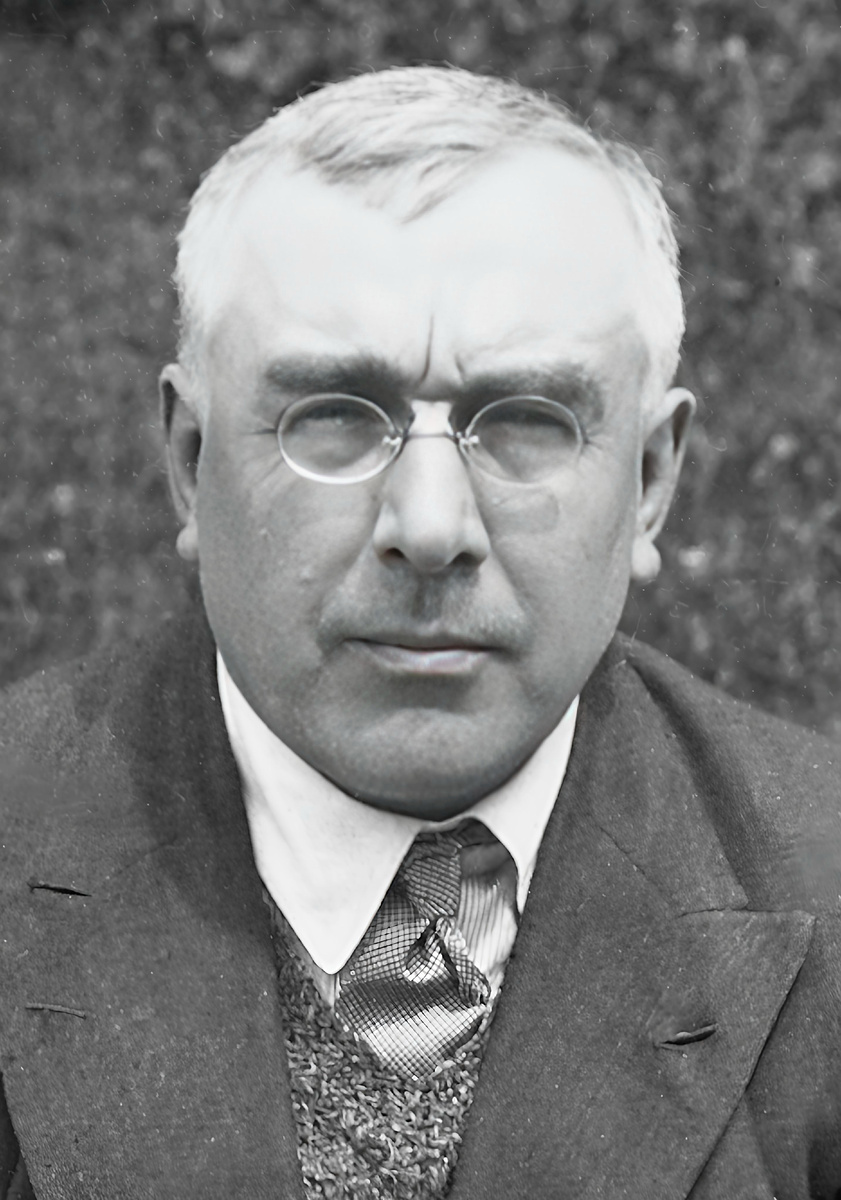 |
Peter D. Ouspensky | 1878–1947
THE SEARCH of P. D. Ouspensky in Europe, in Egypt and the Orient for a teaching which would solve for him the problems of Man and the Universe, brought him in 1915 to his meeting in St. Petersburg with Georges Gurdjieff. (It is Gurdjieff who is referred to, throughout the text of this book, as G.) In Search of the Miraculous: Fragments of an Unknown Teaching is the record of Ouspensky’s eight years of work as Gurdjieff’s pupil.
P. D. Ouspensky was a major contributor to Twentieth century ideas. He anticipated many of the key questions in philosophy, psychology and religion that have driven and informed us throughout the century. Born in Moscow and raised by an artistic and intellectual family, Ouspensky refused to follow conventional academic training. While employed as a journalist, his extensive travels, personal studies, and a quest for the miraculous resulted in the publication of his brilliant Tertium Organum in 1912. He studied intensively with G. I. Gurdjieff between 1915 and 1918. Throughout the rest of his life, Ouspensky continued to promote Gurdjieff’s system as the practical study of methods for developing consciousness. He lived unobtrusively in England after 1921, exerting considerable influence among writers, conducting his own study groups and publishing The New Model of the Universe in 1931. In 1940, he moved to the United States with some of his London pupils and continued lecturing until his death in 1947, shortly after returning to England.
P. D. Ouspensky by John Pentland
First published in The Encyclopedia of Religion edited by Mircea Eliade (1987) New York: Macmillan, Volume 11, pp. 143–144, Pentland’s sketch offers a succinct and original synopsis of Ouspensky’s contributions as an independent thinker and writer and as a leading exponent of Gurdjieff’s teaching.
P. D. Ouspensky: a Biographical Outline
This informed biographical outline was first published in Remembering Pytor Demianovich Ouspensky (1978) a brochure compiled by Merrily E. Taylor and is reproduced with the kind permission of the Manuscripts and Archives Division at Yale University Library.
Ouspensky
Christopher Fremantle—a former pupil of Peter Ouspensky—provides an informed synopsis of Ouspensky’s importance as a philosopher and exponent of Gurdjieff’s teaching.
In Anti-Bolshevist Russia
An article by journalist Carl Eric Bechhofer Roberts first published in The New Age (Jan 6, 1921) London: XXVIII (10), p. 113, and later in In Denikin’s Russia and the Caucasus, 1919–1920. Stranded in the midst of the Russian revolution, the author stays several days in a barn with Ouspensky and Zaharov, another of Gurdjieff’s students. Over a bottle of vodka, Ouspensky engagingly relates some of his light-hearted Moscow and Essentuki adventures.
Black Sheep Philosophers: Gurdjieff—Ouspensky—Orage
An essay by Gorham Munson, a friend and literary colleague of Orage and member of his group in New York for several years. First published a few months after Gurdjieff's death in October 1949, Munson's article offers a concise informed synopsis of Gurdjieff's ideas and biographies of the three men.
P. D. Ouspensky: a Brief Bibliography
Walter Driscoll surveys the major writings by and about Ouspensky, and highlights some additional writings that show his influence.
In Search of the Miraculous
A synopsis by Dr. Jacob Needleman originally presented at the 1980 national meetings of the American Academy of Religion and first published in an expanded form as “Gurdjieff, Ouspensky and Esoteric Philosophy” in Consciousness and Tradition (1982) New York: Crossroads. This revision is published with the author’s kind permission. Professor Needleman offers a thoroughly considered synopsis of the cosmological and psychological ideas contained in Ouspensky’s In Search of the Miraculous.
Around the Theatre: The Voice of MoscowThe Voice of Moscow
On the first few pages of In Search of the Miraculous, P. D. Ouspensky describes his return to Russia in November of 1914 and how, working as a journalist, he came across this notice and put it in his newspaper that winter, shortly before his first meeting with Gurdjieff.
Attempts to Divide Attention
“I saw that the problem consisted in directing attention on oneself without weakening or obliterating the attention directed on something else. Moreover this ‘something else’ could as well be within me as outside me.”
The Study of Attention and the Centres
“It is particularly important to observe the things that attract and keep the attention, because they produce imagination. Study of attention is a very important part of self-study.”
Considering Fragments
Other than Mr. Gurdjieff's own writings, “what other written material has the real stamp of authenticity? Of particular note in this regard is P. D. Ouspensky's In Search of the Miraculous: Fragments of an Unknown Teaching. However, given Ouspensky's early break with Gurdjieff, one might reasonably ask how reliable and complete Fragments is as an introduction? After all, the conversations Ouspensky records—more than two-thirds of Fragments consists of direct quotes from Gurdjieff—took place in Russian almost a century ago. Not only did Ouspensky have to remember his conversations with Gurdjieff but he had to translate his personal notes into a language that he learned later in life. Fortunately we have published appraisals of Fragments from several sources including some of Mr. Gurdjieff's most senior students.”
Biographical materials courtesy of Gurdjieff.org
First published in England in 1950 by
ROUTLEDGE & KEGAN PAUL LTD
BROADWAY HOUSE: 68‑74 CARTER LANE,
LONDON, E.C.4
Second impression 1950
Third impression 1955
Fourth impression 1957
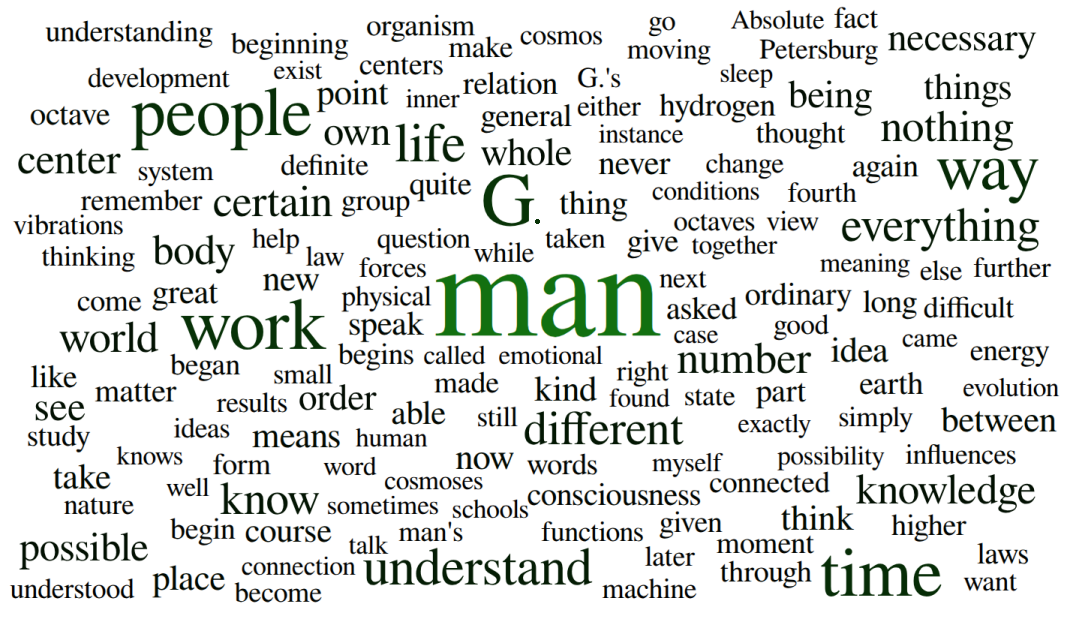
| Words Characters Sentences Avg. Sentence (words) Avg. word length |
178,268 1,011,334 9,609 20 4.7 |
Paragraphs Reading Level Reading Time Speaking Time Unique Words |
2,491 9-10th Grade 10 hrs 48 mins 16 hrs 31 mins 14,781 |
📝 Editor's note: On Sources and Synthesis
The Mystery of Origin
P.D. Ouspensky's account in In Search of the Miraculous presents G.I. Gurdjieff as the sole source of what has come to be known as "the Fourth Way" - a comprehensive system encompassing cosmology, psychology, physiology, sacred geometry, music theory, movement, and practical methods for conscious development. The breadth and internal consistency of this teaching raises a significant question: Could one man have synthesized all of this?
The Improbability Problem
Consider what the Fourth Way encompasses:
- Cosmological framework (Ray of Creation, Law of Three, Law of Seven, Table of Hydrogens)
- Psychological theory (centers, essence/personality, levels of man, chief feature)
- Physiological knowledge (three-storied factory, octaves of food/air/impressions, hydrogens in the body)
- Sacred geometry (the enneagram as universal symbol)
- Movement and music (objective art, inner octaves, sacred dances)
- Practical methods (self-observation, self-remembering, conscious suffering)
- Esoteric Christianity and other traditions (reinterpreted through the system)
For one individual to have created this de novo - or even to have synthesized it from existing sources - represents an intellectual achievement of staggering proportions. Gurdjieff himself claimed to have gathered fragments from various "esoteric schools" during his travels in Central Asia, the Middle East, and elsewhere. But the coherence and integration of these elements suggests either:
- An existing source tradition of remarkable sophistication, or
- Multiple sources whose teachings Gurdjieff wove together with extraordinary skill, or
- Something else entirely
The Question of Transmission
Gurdjieff rarely spoke directly about his sources, and when he did, his accounts were often contradictory or deliberately obscure. This has led to various theories:
Traditional View: Gurdjieff contacted genuine esoteric schools (possibly in Central Asia, Tibet, or the Middle East) that preserved ancient knowledge. He was initiated, trained, and authorized to teach in the West.
Synthesis Theory: Gurdjieff was a brilliant synthesizer who drew from Sufism, Eastern Orthodox Christianity, Buddhism, Hinduism, and other traditions, creating an original integration.
Transmission Theory: Gurdjieff received this teaching from non-human or hyperdimensional sources - what he cryptically referred to as "higher powers" or "conscious beings."
The Limited Hangout Hypothesis
A more critical reading suggests the possibility of what intelligence agencies call a "limited hangout" - genuine information released with strategic limitations built in. In this view:
- The methods (self-observation, self-remembering, work on centers) are authentic and transformative
- The cosmology is substantially true but incomplete
- The limits ("only a few can evolve," "mass evolution threatens cosmic balance") may serve interests other than human awakening
This raises uncomfortable questions: If the teaching contains real knowledge of human potential and methods for accessing it, who benefits from the belief that such work is only possible for a select few? Who benefits from humanity remaining largely unconscious?
Multiple Players, Multiple Agendas
Drawing from various esoteric frameworks (including Kyle Griffith's War in Heaven and contemporary research on human origins), we might consider a more complex picture:
Different entities or forces with different agendas:
- Evolutionary Forces (call them "Seeders") - want humanity to develop consciousness and higher capacities
- Stabilizing Forces ("Maintainers") - want equilibrium and gradual change, fear disruption
- Control Systems ("Theocrats" or "Harvesters") - benefit from humanity remaining unconscious, harvest human energy/attention/emotion
If multiple factions exist with competing interests in human evolution, then:
- Gurdjieff may have received information from multiple sources
- Different parts of the teaching might reflect different agendas
- The contradictions and limitations might not be mistakes but compromise
- What was transmitted, and what was withheld, may reflect a complex negotiation
The Forbidden Extension: Conscious Reproduction
One notable gap in Gurdjieff's teaching concerns the domain of reproduction and child-rearing. While the Fourth Way is explicitly for "householders" (people living ordinary lives, not monastics), it has remarkably little to say about:
- Conscious conception
- Conscious pregnancy and birth
- Raising children as conscious beings from the beginning
- Multi-generational transmission of the Work
Why this gap?
If individual awakening is possible but impermanent (ending with death), and if children are born "asleep" and must start from scratch each generation, then the system remains contained. A few individuals awaken, die, and the harvest continues.
But conscious reproduction - raising children who are conscious from the beginning - would change the equation fundamentally:
- The next generation would not start from zero
- Over time, the proportion of conscious to mechanical humanity would shift
- This would be permanent, not temporary
- This would threaten any system that depends on humanity remaining unconscious
The teaching that "mass evolution would be fatal for the moon" or "threaten cosmic balance" might be:
- Literally true (given current arrangements)
- Propaganda to prevent exactly this kind of generational transformation
- A statement about current limitations being presented as cosmic law
Intervention Theory and Human Potential
Recent research in genetics, anthropology, and comparative biology reveals anomalies in human development that suggest possible intervention or modification:
- Human chromosome 2 appears to be a fusion of two ancestral chromosomes
- Rapid development of human cognitive capacity lacks clear evolutionary pathway
- Humans possess capacities (language, abstract thought, self-reflection) disproportionate to survival advantage
If humanity has been genetically modified, the questions become:
- Modified by whom? For what purpose?
- Was it enhancement or limitation? Or both?
- Do we contain dormant capacities that current conditions suppress?
- Would conscious reproduction activate or develop these capacities?
Reading This Text with Open Questions
In Search of the Miraculous remains one of the most comprehensive accounts of Gurdjieff's teaching. It contains methods that demonstrably work for those who apply them sincerely. But it also contains frameworks and limitations that deserve critical examination.
As you read, consider:
- Which parts of the teaching are methods (testable, experiential)?
- Which parts are cosmology (explanatory framework, possibly incomplete)?
- Which parts are limits ("not for everyone," "threatens balance")?
- Who benefits from each of these elements?
The teaching itself encourages verification through personal experience and warns against believing anything merely on authority. Perhaps this same principle should be applied to the teaching's own statements about human potential and possibility.
The Fourth Way may be more powerful - and more dangerous to existing systems - than even Gurdjieff explicitly stated. The real question is not whether the teaching is true, but whether it goes far enough.
These notes reflect the editor's perspective and do not represent consensus within Fourth Way communities. Readers are encouraged to study the original text, practice the methods, and form their own conclusions.
In Search of the Miraculous
by P. D. Ouspensky
Standalone Digital Edition - Download
Download a complete, standalone HTML edition of P. D. Ouspensky's masterwork "In Search of the Miraculous: Fragments of an Unknown Teaching (1949).
This digital edition has been carefully prepared to preserve the integrity of the original text while enhancing readability and navigation for modern readers.
✨ Enhanced Features in this Edition:
- 📖 Complete Text - All 18 chapters (396 pages), unabridged
- 🎨 All 61 diagrams and figures, professionally restored and formatted
- 📑 Interactive table of contents (accordion-style) with detailed topic navigation for each chapter
- 📖 Clean, readable typography optimized for digital reading
- 🔍 Comprehensive Index System - Dual figure indexes (by number & topic) plus full searchability
- 💾 Offline Access - Read anywhere, anytime (no internet connection required after download)
- 📱 Mobile Friendly - Works on any device, compatible with all modern web browsers
- 🎯 Accurate - Carefully proofread and verified
- ⚡ No installation required - just open the HTML file
📥 Download "In Search of the Miraculous"
Standalone HTML Edition
Download “In Search of the Miraculous”
File Details:
- Format: Standalone HTML (single file)
- Size: 9.6 MB
- All images embedded using base64 encoding
- No external dependencies
Using This Edition:
- Download the HTML file to your computer
- Open with any web browser (Chrome, Firefox, Safari, Edge, Opera, Brave)
- Bookmark for easy access
- Use browser's Find function (Ctrl+F / Cmd+F) to search the text
- Navigate using the interactive table of contents
- Works on desktop, tablet, and mobile devices
Tip: Save to your desktop or documents folder for quick access
About This Digital Edition:
This scholarly digital edition was created from a high-quality scan of the original 1949 publication. Every figure has been carefully cleaned and restored. The text has been proofread for accuracy. Interactive navigation features have been added to enhance the reading experience while maintaining the structure and content of the original work.
This edition includes:
- Text analytics and word frequency visualization
- Comprehensive author biography and contextual resources
- Professional typography and layout
- Preservation of original pagination for citation purposes
Copyright / Disclaimer
"In Search of the Miraculous" by P. D. Ouspensky was first published in 1949.
This digital edition is provided for educational and personal study purposes.
Additional Info
Questions or Issues?
If you encounter any problems with this edition or have suggestions for improvement, please use our contact form.
This digital edition was prepared with care and respect for Ouspensky's work and Gurdjieff's teaching. May it serve seekers and students of the Fourth Way.
"Man has the possibility of development, but the development of man is not a necessity; it depends upon his own efforts." - G. I. Gurdjieff